
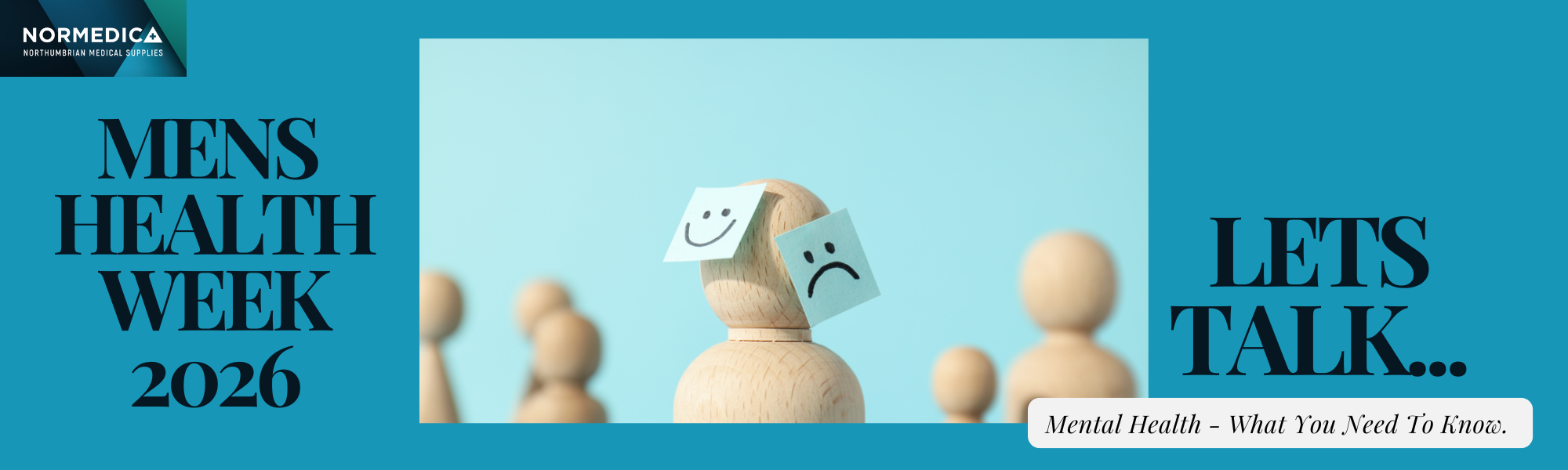
It’s Men’s Health Awareness Month and, as part of that, we’re taking a closer look at some of the issues that affect men and in doing so, hopefully raise a little more awareness around them.
Today, we want to talk about mental health.
The conversation around mental health has grown exponentially over the last decade. Whilst there is still a long way to go, much of the stigma that was once attached to it is slowly disappearing. Recognising mental health as something we need to care for in the same way as our physical health is essential if we are to cope with the stresses that life throws at us.
Today’s world can be exceptionally difficult to navigate, with figures suggesting that one in four people experience mental health problems at any one time, it is vital that we continue to have open and honest conversations about this topic.
Mental health does not discriminate.
It can affect anyone regardless of age, background, or gender. What gender does seem to influence however, is the way people respond when they are struggling.
Despite increased awareness and a greater willingness to discuss mental health, men continue to account for the majority of suicides in the UK. In 2023, around 74% of people who died by suicide were male, a figure that has remained consistently high for several years.
This raises an important question.
Why do so many men still feel unable to ask for help when they are struggling?
For generations, men have often been expected to be the “strong” ones. Many grew up being encouraged to shake things off, keep going and avoid showing emotions that might be viewed as weakness. Whilst resilience is an important quality, these expectations can sometimes make it difficult for men to speak openly about how they are feeling.
Whether it is a fear of judgement, a belief that they should be able to cope alone or simply not knowing how to start the conversation, too many men continue to suffer in silence.
The dialogue is changing, but when we are still losing people to suicide, it is clear that change is not happening quickly enough.
So what should we be looking out for in the people we care about?
Possible Warning Signs
Mental health difficulties can present in many different ways, but some common signs include:
- Anger, irritability, or aggressiveness
- Noticeable changes in mood, energy level, or appetite
- Difficulty sleeping or sleeping too much
- Difficulty concentrating, feeling restless, or on edge
- Increased worry or feeling stressed
- Misuse of alcohol, drugs, or both
- Persistent sadness or feelings of hopelessness
- Feeling flat or having trouble feeling positive emotions
- Engaging in high-risk activities
- Aches, headaches or digestive problems without a clear cause
- Obsessive thinking or compulsive behavior
- Thoughts or behaviors that interfere with work, family, or social life
- Thoughts of death or suicide or suicide attempts
Men and Mental Health – National Institute of Mental Health (NIMH)
We all have bad days from time to time, but when these signs become persistent or begin to affect daily life, it may be time to reach out and let that person know you are there for them.
Research has shown that when men are struggling, they may be more likely to withdraw from those around them, self-medicate through alcohol or drugs, become homeless, or express their distress through anger and aggression. These behaviours can increase vulnerability and may contribute to an increased risk of suicide.
Starting the Conversation
Knowing the warning signs is one thing.
Knowing how to approach someone who may not want to talk is another.
It can be difficult to get someone to open up. Particularly if they have spent years believing they need to cope on their own.
However, breaking through that wall can be incredibly important.
If you are concerned about a friend, partner, colleague, or family member, small actions can make a difference. Check in regularly. Listen without judgement. Let them know you are available. Encourage them to seek professional support if they need it.
Mental health support is never one-size-fits-all. What works for one person may not work for another, and it can take time to find the right combination of support, treatment, or coping strategies.
The important thing is knowing that help is available.
If you are willing to ask for help, there are many people, organisations, and services ready to support you and help you find a way forward.
If you are struggling, or if someone you know needs support, please reach out.
And remember:
You do not have to face it alone.
Andy’s Man Club | #ITSOKAYTOTALK | Andy’s Man Club
Homepage | Campaign Against Living Miserably (CALM)
Samaritans | Every life lost to suicide is a tragedy | Here to listen
Find A Shed | UKMSA | Men’s Sheds Association